1 Poll Closing October 30, 2025
The DAO Incentive Program (DIP 2.0)
Summary: This poll asks ARB holders if they support revising the current delegate incentive plan. This introduces a peer recognition program, redefines who an eligible delegate is, and makes significant changes to the mandate of the program manager and funding discretion. Voters are strongly encouraged to view the full details here.
NB: GFX Labs is one of the eight delegates named as founders in the Arbitrum Peers body, which nominates its own new members.
Recommendation: Vote Against. There has been a documented history of delegates unhappy with the current delegate incentive program (DIP 1.7). In response, the Foundation has put forth this proposal (DIP 2.0) and a delegate has offered a competing alternative (Arbitrum Triple Dip).
We have tried to evaluate DIP 2.0 within the context of an upcoming alternative in the Arbitrum Triple Dip. Both are relatively complex in how they assign compensation, with notably more discretion in the DIP 2.0 than the Triple Dip.
Working out what our own pay would be as an example, the Triple Dip makes us fare slightly worse. However, the DIP 2.0 is much more difficult to assess since the program manager is awarded significantly more powers than the current, apparently unpopular (although not with us) DIP 1.7. Our best guess is that compensation would be lower across the board, and flat-to-lower for us.
More broadly, we agree with L2Beat’s comments that there seems to be no clear agreement on what the primary goal is amongst the existing and two competing reformed versions of delegate compensation. Is it to grow delegate count? Is it to make delegates better at voting on every proposal? Is it to encourage delegates to more carefully read and educate themselves on a specific poll? Is it to strengthen or loosen oversight over various entities nominally under the supervision of governance?
We appreciate the work of the Foundation and of Paulo for drafting DIP 2.0 and the Triple Dip, respectively. We also acknowledge that many delegates have been frustrated under the current regime of DIP 1.7, administered by SEEDGov.
At this juncture, however, this is becoming a distraction. Multiple calls were held to discuss this over the last few weeks, with many top delegates spending time to understand the very complex proposals.
Arbitrum governance expense on delegates is, quite frankly, one of the worst places to attempt to squeeze out cost savings. So until another objective gains consensus support – such as increasing regularly voting delegates or incentivizing more proposals from delegates – we don’t think this is a good use of time.
Arbitrum, like all other chains, faces the stark financial reality that it is several years post launch, and still does not have a viable, published plan to get to financial sustainability. Unlike other chains, Arbitrum’s community seems more self-aware of this, and has a relatively robust local economy to work with.
While Arbitrum is still in a growth phase, the sole reliance upon the ARB token as a source of financing is not far from pushing on a string.
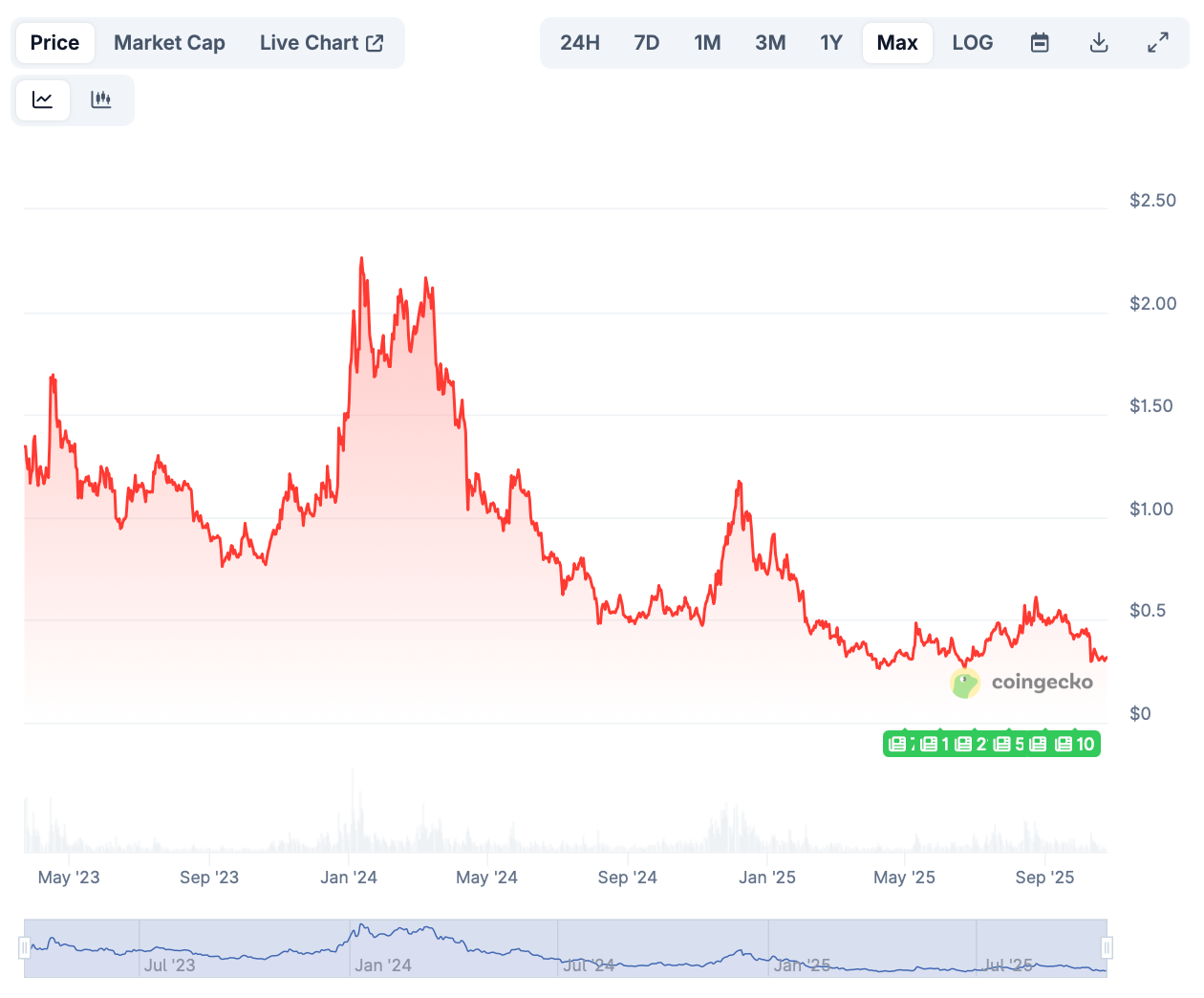
More than two years post TGE, Arbitrum has only made marginal improvements to its income – notably Timeboost and interest from the STEP assets. But all operating and investment revenue is woefully inadequate, even with the heady days of spray-and-pray WAGMI rocket emoji incentives programs in the past.
We do not support important entities and delegates doing further work on reforming the delegate incentives program unless it is iterative, lightweight, and can be communicated without the need for a presentation call. The focus needs to be on identifying future or present income opportunities for Arbitrum, creating a plan, and executing on it.